- Dates fall under HS subheading 0804.10; confirm the national tariff line and the duty rate with your customs broker.
- Under FOB, CFR and CIF alike, risk passes to the buyer once the goods are on board the vessel at the port of loading, not on arrival.
- Assume no certificate is available unless it is named in the offer or the contract.
- An approved reference sample is the yardstick the shipment is checked against at loading.
Before you ask for a price: write the brief
A quotation can only be as precise as the enquiry behind it. A one-line request — “what is your price per tonne?” — earns an approximate answer nobody can build on; a specific brief earns an offer that can be compared and signed. Settle six things:
- Use and market: retail, repacking or processing? It decides the specification before anything else does.
- Volume and rhythm: one shipment or a recurring supply, by the tonne or by the full container.
- Packing: cartons or bulk bags, the net weight, and whether the pack carries your own brand.
- Port of arrival: it sets the freight cost and the transit time.
- Delivery term: FOB, CFR or CIF.
- Your country's requirements: the documents, tests and label details your authorities insist on.
The list of what we need from you to issue a quotation is in the buyer questions.
Start with your own country's rules
What holds up food shipments is rarely the sea leg; it is a missing paper on arrival. The importer is the one who knows what their customs and food authorities demand, so go through these points with your customs broker before the order is fixed:
- Tariff classification: dates, fresh or dried, sit under HS subheading 0804.10; the national tariff line and the duty rate vary from country to country.
- Importer registration or an import licence, where your country requires one for food.
- Plant health: whether a phytosanitary certificate is required, and whether a specific treatment against storage pests is mandated.
- Labelling: the language, the country of origin, the net weight, the production and expiry dates, and the importer's details.
- Laboratory testing: which analyses are required at entry, and to what limits.
Send that list to the supplier before contracting, not after: a certificate requested once the container has been loaded may be impossible to issue.
FOB, CFR or CIF?
All three are sea-freight terms, and they share a point many buyers miss: risk passes to the buyer the moment the goods are loaded on board the vessel at the port of shipment. Where they differ is in who contracts and pays for carriage and insurance.
| Term | Who books and pays the sea freight | Insurance | Suits |
|---|---|---|---|
| FOB Umm Qasr | The buyer | The buyer's choice and cost | Buyers with their own forwarder and freight contracts |
| CFR | The seller, to the port of arrival | The buyer's choice and cost | Buyers who want a price landed at their port and insure the cargo themselves |
| CIF | The seller, to the port of arrival | The seller, at minimum cover | Buyers who want a landed price with insurance included |
Two cautions. First, under Incoterms 2020 the insurance a CIF seller must provide is minimum cover — Institute Cargo Clauses (C). If you want wider cover, ask for it explicitly and agree the cost. Second, never compare two offers quoted on different terms: ask every supplier for the same term and the same port.
The terms we quote on are listed in the buyer questions.
The documents that travel with the shipment
The list changes with the importing country and the contract, but these are the usual papers for a consignment of dates:
- Commercial invoice: the parties, the description, the quantity, the price and the delivery term.
- Packing list: the number of packs, and the net and gross weights.
- Bill of lading: the sea-carriage document against which the goods are released at the port of arrival.
- Certificate of origin: evidence that the goods are of Iraqi origin.
- Health certificate or phytosanitary certificate, where applicable.
- Additional certificates agreed in advance, such as an inspection certificate from an independent body.
Two rules prevent most problems: the consignee's details and the description of the goods must match word for word across every document, above all when payment is by letter of credit; and no certificate should be assumed unless it is named in the offer or the contract.
Sample, contract and inspection
Dates are a farm product and change from one crop to the next, so “good quality” is not a contract term. What protects you is a clear sequence:
- An approved reference sample: you receive it, assess it and approve it in writing; it becomes the benchmark.
- A contract that spells things out: the specification and defect tolerances, the packing and labelling, the shipment window, the delivery term, payment, documents, and how any claim will be handled.
- Pre-shipment inspection: documented grading, packing and loading, or an independent inspection body appointed at your cost with its criteria agreed beforehand.
- Conformity at loading: the goods are checked against the sample before the container is sealed.

The container and the loading
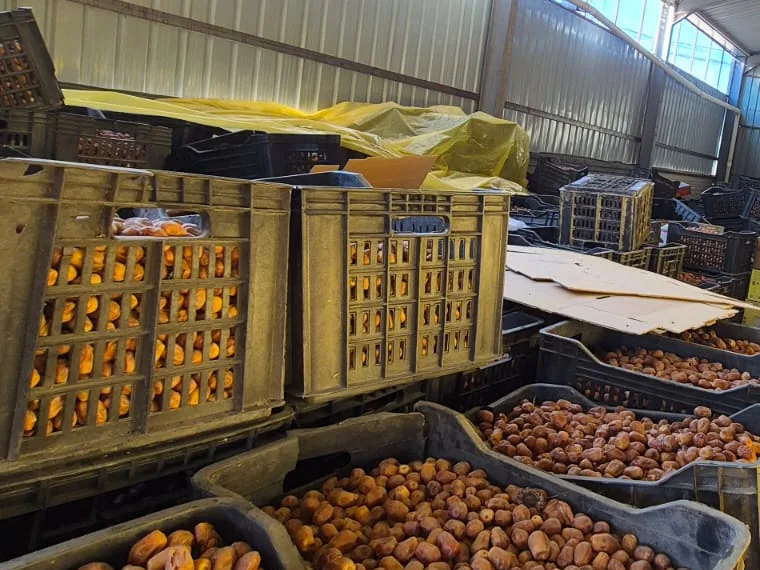
Dates ship in full 20ft or 40ft containers. Zahdi is a semi-dry date, which is why it stands a sea voyage better than the soft varieties do; even so, heat and humidity are the enemies of any date. Ask three questions when the freight is being fixed:
- Container type: a standard dry container or a refrigerated one. The choice depends on the sailing season, the length of the voyage and the specification, and it shows in the cost.
- How it is loaded: on pallets or floor-stacked — it changes the net load and how easily you can unload.
- Treatment against storage pests: whether your country requires it, and whether you need a certificate for it.
The estimated load per container is given in the buyer questions, and the packing options in the packing section.
Payment and timing
Two methods are common in the date trade: bank transfer in agreed instalments, and a letter of credit for transactions that qualify. A transfer is simpler and cheaper in bank charges; a letter of credit ties payment to the presentation of conforming documents, which gives both sides more security in exchange for fees and stricter paperwork. The payment terms we work to are set out in the buyer questions.
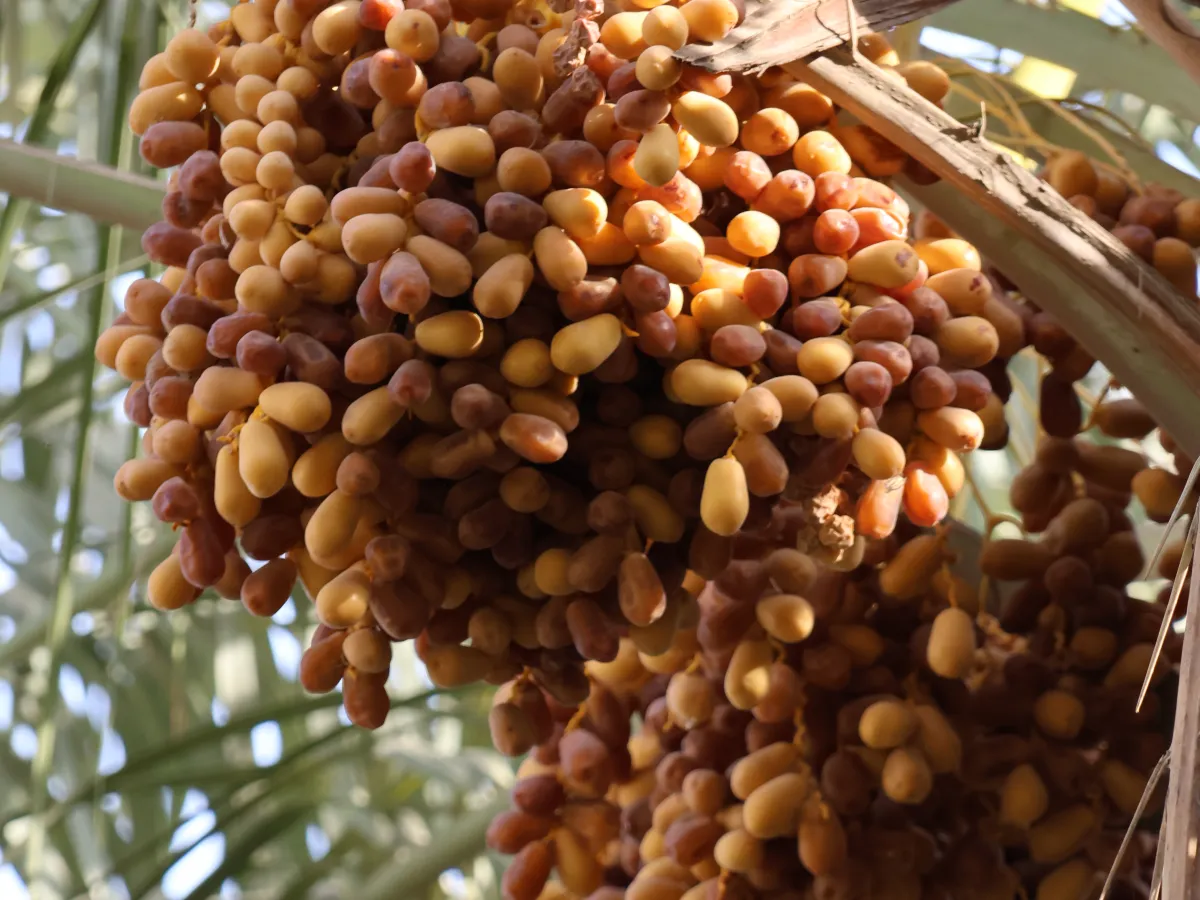
Timing is governed by four things: whether the crop is available in the grade you need, how long grading and packing take, the printing of the packs if they carry your brand, and then the vessel schedule and the transit time. Zahdi is picked from late summer into the autumn, so anyone planning large volumes or own-brand packing does well to open the conversation early in the season.
Read the whole offer: from price per tonne to landed cost
A price per tonne does not tell you what the goods will cost in your warehouse. Add up every line before you compare:
- The price of the goods at the agreed grade and packing.
- Private-label artwork and printing, if any.
- Sea freight and insurance, where they are not in the price.
- Charges at the port of arrival, customs clearance and inland transport.
- Customs duty and taxes in your country.
- Independent inspection and laboratory analyses, if you ask for them.
Then compare offers on the same footing: the same grade, the same packing, the same delivery term and the same price validity. A cheaper offer for a lower grade, or on a different term, is not cheaper. What drives our own price is explained in the buyer questions.
Five mistakes that recur on a first shipment
- Comparing offers quoted on different grades or different delivery terms.
- Contracting on a general description with no approved reference sample.
- Telling the supplier about labelling or certificate requirements after preparation has started.
- Assuming CIF means the seller carries the risk of the voyage.
- Leaving destination port and clearance costs out of the feasibility sums.
Have your brief ready?
Send us the use, the volume, the packing and the port of arrival, and we will reply with a written offer for Iraqi Zahdi dates from Karbala.