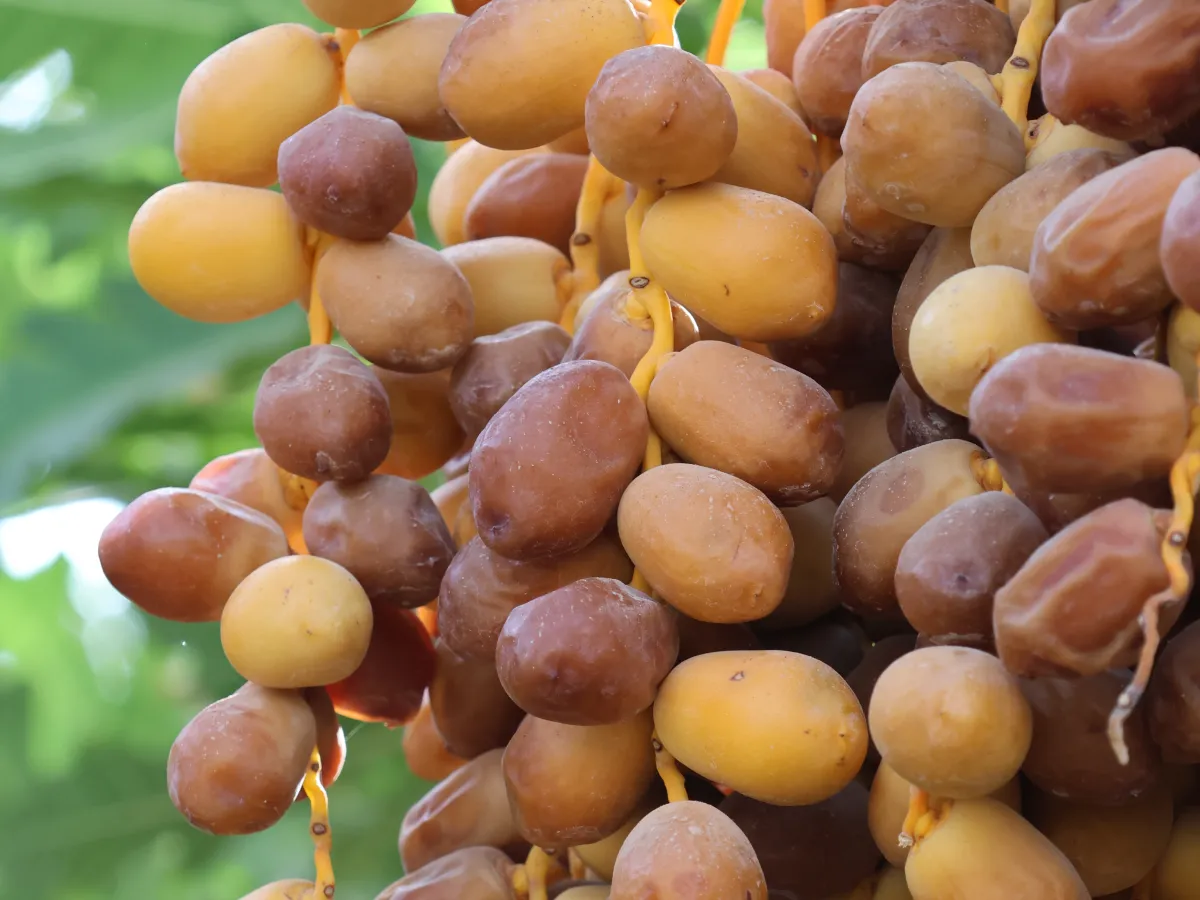
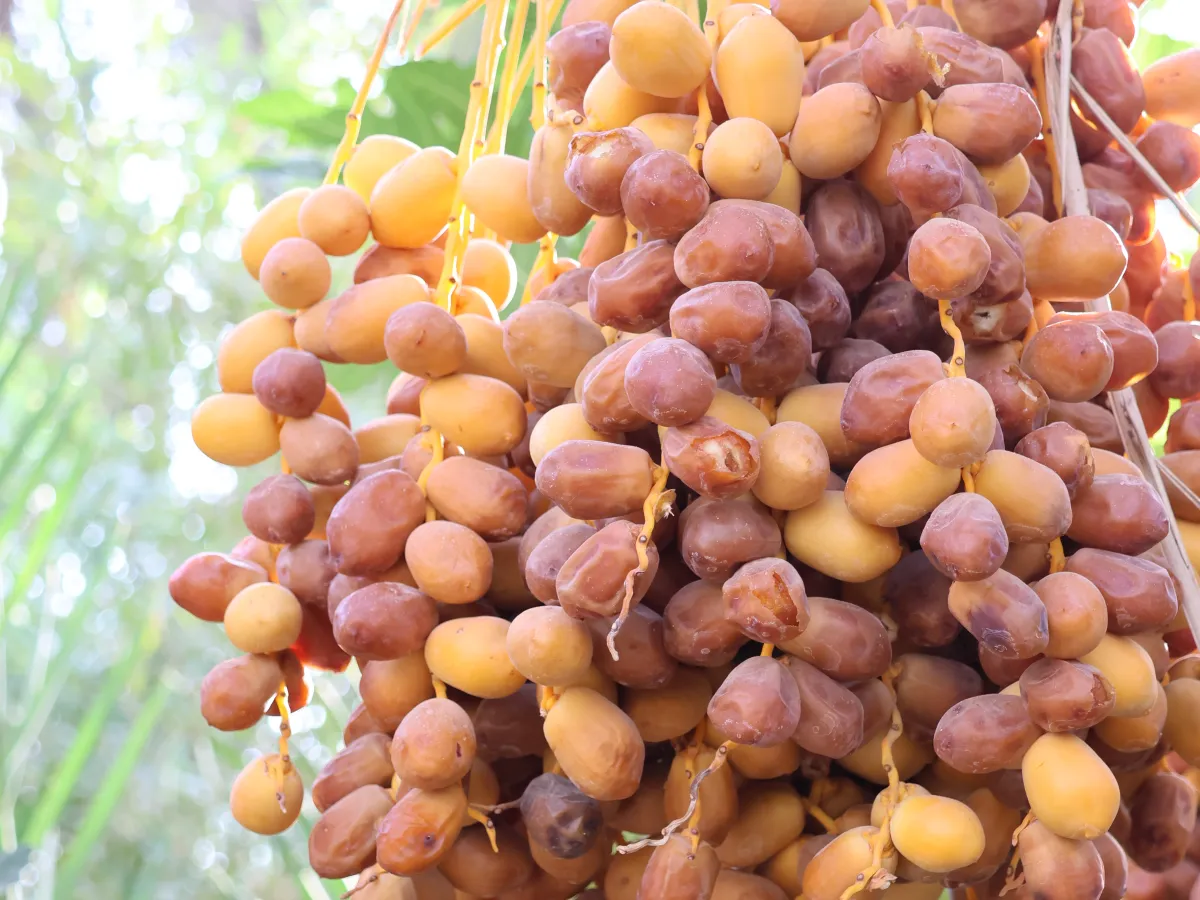
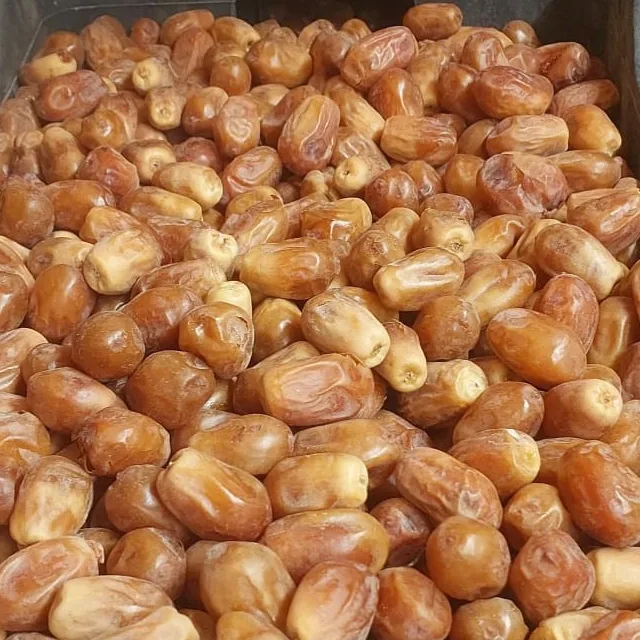
- Zahdi is a semi-dry date, golden to light brown and firm — a variety for volume and value, not for the gift box.
- Its nearest neighbours in use are Deglet Noor and Sayer, both semi-dry.
- Medjool and Mazafati are soft dates and normally need a cold chain.
- The buying decision follows the use: premium table, value table, repacking or processing.
Three classes explain most of the differences
Commercially, dates are divided by the moisture of their flesh at ripeness into soft, semi-dry and dry. This is not a botanical footnote: it decides how a variety is stored, how it ships, how long it lasts on the shelf, and whether it can go through pitting and dicing machines.
- Soft: moist flesh and a concentrated flavour, but quicker to spoil and usually in need of refrigeration.
- Semi-dry: firm, less sticky flesh that stands storage and transport and suits both the table and the factory.
- Dry: hard in texture and long-keeping, with a narrower range of uses.
Zahdi belongs to the middle class, and that is where its strength lies.
The comparison at a glance
| Variety | Best-known origin | Class and appearance | Place in the trade | Storage and shipping |
|---|---|---|---|---|
| Zahdi | Iraq | Semi-dry Medium, oval, golden to light brown | Value table date, repacking, bakery and processing | Stands storage and sea freight; kept cool and dry |
| Deglet Noor | Algeria and Tunisia | Semi-dry Medium, elongated, translucent amber | Table date, often sold on the branch; bakery and processing | Keeps and travels well |
| Sayer (Estamaran) | Khuzestan in Iran and the Shatt al-Arab in southern Iraq | Semi-dry Medium, dark reddish brown | Bulk export for the table and for processing | Keeps and travels well |
| Medjool | Moroccan in origin; now grown in Jordan, Morocco, the United States and elsewhere | Soft Large, dark brown, thick flesh | Premium retail and gifting | Usually stored and shipped chilled |
| Mazafati | Bam in Kerman, Iran | Soft (fresh) Medium, black, high in moisture | Fresh table date | Needs a cold chain |
These are the general traits of each variety. The actual specification of any shipment is fixed by the sample and the contract, not by the name of the variety.
Zahdi and Medjool: two different markets
Medjool is the showpiece date: a large, soft fruit sold by the piece and in the presentation box, and kept chilled from the farm to the shelf. Zahdi is its commercial opposite: a firm, medium-sized fruit sold by the kilo, the carton and the tonne, and cheaper to ship and to store. A buyer looking for a gift date will not find it in Zahdi; a buyer filling the shelves of a mass market, feeding a packing line or supplying a paste plant will not find the economics in Medjool.
Zahdi and Deglet Noor: the closest in use
Both are semi-dry, and both go into bakeries and food plants. Deglet Noor is longer and lighter, with the amber translucence it is known for; it is the familiar variety in European markets and is often displayed on its branches. Zahdi is shorter and broader, an opaque gold, and firmer in texture.
For an industrial buyer the choice usually comes down to three things: the price landed at the factory, the colour wanted in the finished product, and what consumers in the target market are used to. That is why it pays to run a sample of each variety on your own line before fixing a supply contract.
Zahdi and Sayer: colour and flavour
Sayer is also semi-dry and is exported in large volumes, but it is darker — a reddish brown — and fuller in flavour. Zahdi is lighter in colour and milder. The difference shows in the processed product: a light variety usually gives a paler paste and syrup, a dark one a deeper colour. If the colour of your finished product is part of its specification, start there.
When Zahdi is the right buy
Zahdi is the right variety when:
- you need an affordable table date for broad markets;
- you repack under your own brand and need fruit that stands up to automated lines;
- you make paste, syrup or fillings and need a light-coloured raw material available in volume;
- your sea route is long and you want a variety that travels;
- you are building a recurring supply and need a variety that is there season after season.
And it is not the right variety when:
- you sell a premium gift date priced by the piece;
- your customers want a large, soft fruit;
- your brand is built on a specific variety that consumers know by name.
How to compare offers across varieties
Price per tonne is not enough to compare two varieties. Look at what you will actually get:
- The ratio of flesh to pit, if you will pit or process the fruit.
- The defect tolerances in each offer — they decide how much you lose.
- Moisture, for its effect on shelf life and on the weight you pay for.
- The cost of refrigeration in shipping and storage, where the variety calls for it.
- Whether the same volume at the same specification will be there for the next shipment.
What defines a Zahdi shipment — size, colour, moisture, skin and defects — is covered in the Zahdi dates guide.
Want to judge Zahdi for yourself?
Tell us your market and your intended use, and we will suggest the specification that fits and arrange a sample of Iraqi Zahdi dates with you.