- “Industrial” does not mean “spoiled”: it is sound, clean fruit that falls outside the appearance specification for retail.
- The Codex standard for dates (CXS 143-1985) covers whole dates packed for direct consumption and excludes dates intended for industrial purposes — so your contract is your specification.
- Zahdi is semi-dry, firm and light in colour, and available in large volumes.
- Compare offers on the cost of a usable tonne, not on the price of a delivered tonne.
What are industrial dates?
After the harvest, dates are sorted into grades. Fruit that is even in size and colour, with a sound skin, goes into retail packs. Fruit that falls outside that specification — uneven in size or colour, or with the skin separating — is still good to eat, but it belongs on a processing line that will mill, press or dice it, where its looks no longer matter.
One line is not negotiable: industrial dates are still food. They must be sound, free from live insects, mould and fermentation, and clean of foreign matter within limits the contract states. Fruit that fails that is not an industrial grade; it is rejected goods.
And because the Codex standard for dates (CXS 143-1985) is written for whole dates packed for direct consumption and expressly excludes dates intended for industrial purposes, there is no ready-made international benchmark to fall back on for this grade. The specification written into your contract, and the approved sample, are the reference.
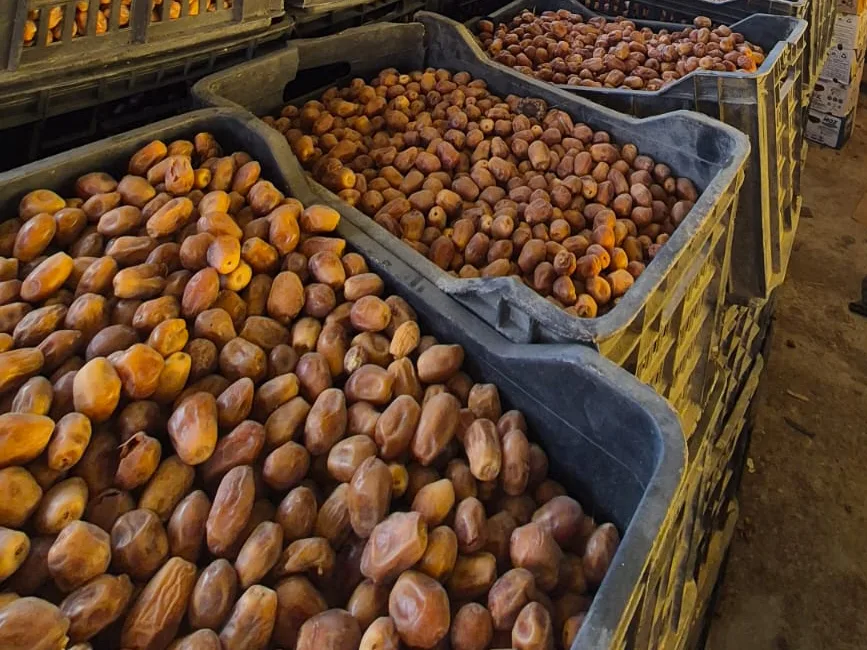
What is made from Zahdi?
- Date paste: for fillings, maamoul, biscuits and energy bars.
- Date syrup (dibs): a liquid sweetener for the table and for food manufacturing.
- Chopped and diced dates: for bakeries, breakfast cereals and confectionery.
- Date powder and date sugar: a sweetening alternative in dry mixes.
- Vinegar and other fermented products.
By-products of processing, such as the pits, go on to other industries, animal feed among them.
Why Zahdi suits a processing line
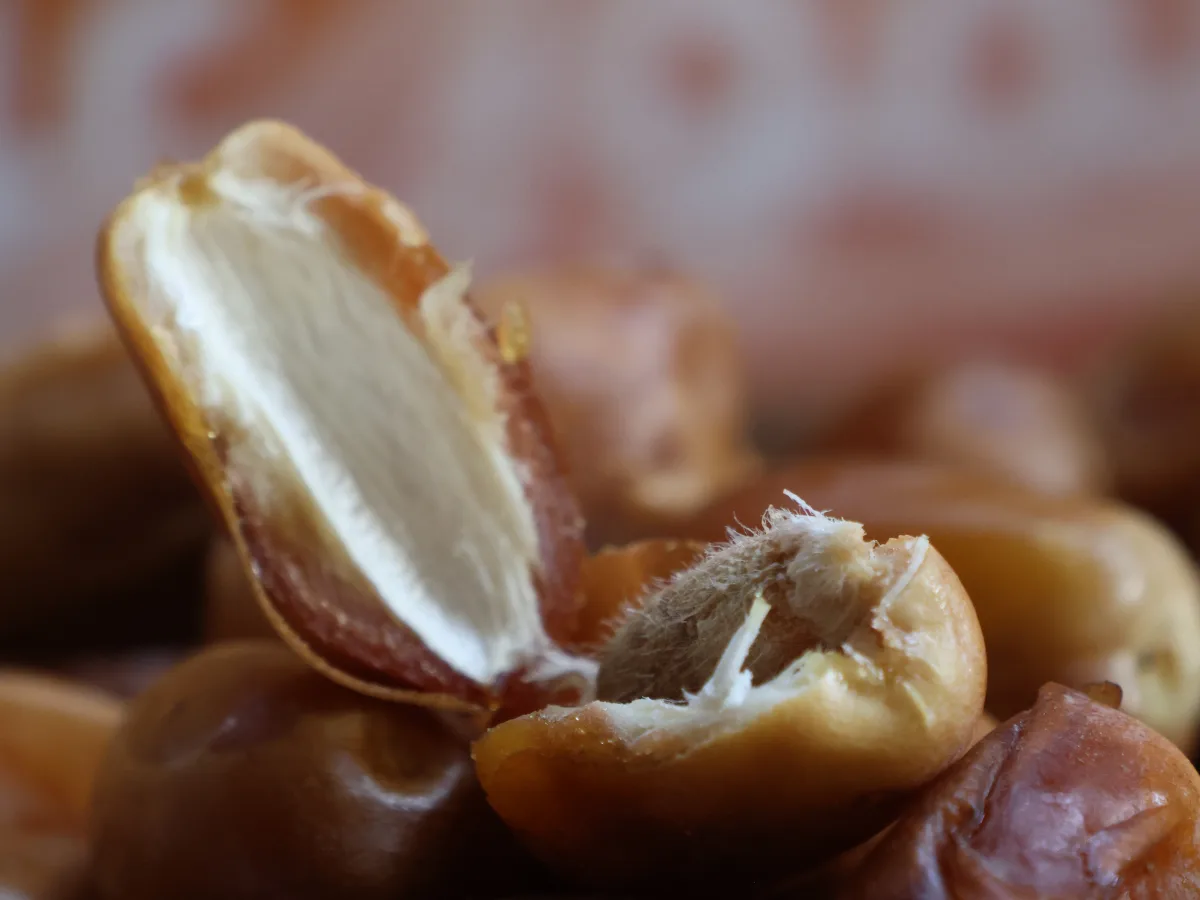
- A firm, semi-dry texture: less sticky than the soft varieties, so it is easier to convey, unload, pit and dice by machine.
- A light colour: it usually gives a paler paste and syrup, which many products call for.
- A moderate sweetness: it does not overpower the other ingredients in a recipe.
- Abundance and continuity: a widely planted variety in Iraq, available in commercial volumes season after season.
- It stands storage and shipping: so it reaches you in the condition it left in.
Write the specification: eight lines
The tighter the specification, the fewer the surprises when the container is opened. Set out in your enquiry:
- The end use: paste, syrup or dicing — each has its own priorities.
- The form of the raw material: whole fruit with the pit, the usual form for bulk raw material, or another preparation whose availability you should ask about.
- Moisture: an acceptable range, for its effect on yield and on how the fruit behaves on your machines.
- Defect tolerances: damaged, unripe and discoloured fruit, with a percentage for each.
- Infestation: no live insects, and an agreed limit for signs of past infestation.
- Foreign matter: caps, stalks, dust and stones, and their limits.
- The crop year and how the fruit has been stored since the harvest.
- Laboratory analyses your market requires, if any, and who carries them out.
Then ask for a sample that genuinely represents the grade rather than the best of it, and approve it as the reference. The grades we supply include raw material prepared for processing.
Cost the yield, not the tonne
A factory pays for the tonne it receives and sells what comes off its line. Between those two figures stand three things: the pits, the fruit your own sorting rejects, and moisture.
Take the sample, weigh out a known quantity, pit it, set aside whatever is unusable, and weigh what is left. That ratio is what you compare offers on: a cheaper offer with a higher loss can turn out the dearer one.
Packing, shipping and storing bulk volumes
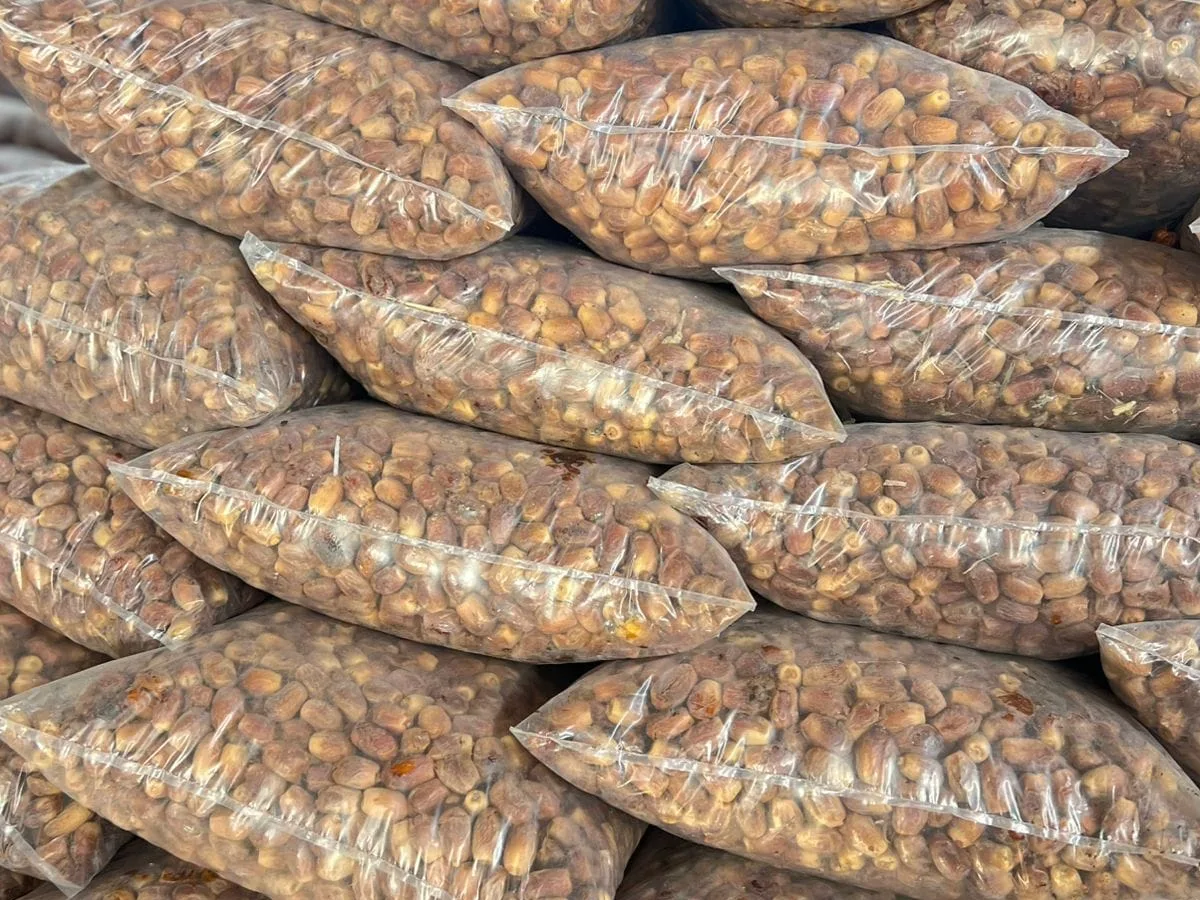
Industrial raw material ships in food-grade bulk bags or in lined cartons. Bags make better use of a container's weight and volume; cartons are easier to stack, handle and store over a long period. The options and weights are in the packing section.
On arrival, store the dates somewhere cool, dry and well ventilated, away from strong odours, and work first in, first out. If you will hold stock for months in a hot climate, cold storage protects it from storage pests and from darkening.
Plan the supply across the year
The crop is seasonal and the factory runs all year. Zahdi is picked from late summer into the autumn, and volumes and grades are at their widest straight after the season. Plants that need a steady supply usually agree an annual volume delivered in scheduled lots, with a written mechanism for updating the price. Regular supply is covered in the buyer questions.
Buying for a production line?
Send us your end use, your monthly or annual volume and your port of arrival, and we will suggest the specification and the packing that fit.